The best compound bow for beginners in 2026
Three criteria, set before we examined a single bow, applied to named expert roundups, verified at the makers' pages, and checked against owner reports at stated scale. The rule is simple: a first bow that fits beats a flagship that does not.
By Bowhunt America | Published 2026-06-15
Updated 2026-06-15
The verdicts, up front
- Top beginner pick: Bear Cruzer G4 RTH
- Grow-with-you pick: Diamond Pro 305
- Youth and form pick: Genesis Original
- Budget: Diamond Edge 320; covered in the compound bow guide, linked below
How we picked
Fit range and adjustability came first, because your draw is unknown and changing. Forgiveness and a smooth draw at low-to-mid weight second. Out-of-box completeness and the setup it needs third. Price against the field last.
This guide is for two first-time buyers: the adult picking up a first serious compound, and the parent or mentor buying for a youth who will grow. Both share one problem, which is that the most important number, your draw length, is one you probably do not know yet, and your draw weight will change as your form does. So the criteria here put fit and adjustability first and speed nowhere near the top, set and weighted before we examined a product page. The full basis for every claim is in the methodology block, including the catalog churn that moved three of our starting candidates out from under us this year.
The criteria, in the order they were weighted
Set before any bow was examined, in this order, for these reasons: the beginner's draw length is unknown at purchase and the draw weight will climb as form develops, so fit range and adjustability lead, because a first bow that fits and grows beats a flagship that does not; a forgiving, smooth draw at the 40-to-60-pound range a beginner starts in builds good form while a harsh one trains a flinch, so forgiveness is second; the beginner buys a shootable rig, not a bare riser, so out-of-box completeness and the setup it needs come third; price lands last, because the budget is real but a bow that does not fit is no bargain.
- Fit range and adjustability: draw-length and draw-weight range, the weight floor, and whether one bow covers a growing or uncertain shooter without a press
- Forgiveness and draw smoothness: brace height, axle-to-axle, and draw-cycle behavior at the low-to-mid weights a beginner starts in
- Out-of-box completeness and setup: the ready-to-hunt package contents and quality, and how much the bow leans on a good shop setup
- Price and value against the field: the verified price, judged against what the first three deliver for a first season
How we reviewed this
- Criteria:
- The three criteria above plus price, in weighted order, committed before product research began.
- Evidence:
- Verified manufacturer specs read off each maker's current page and dated June 15, 2026, with the fit numbers (draw-length and draw-weight range and the weight floor) treated as central; bows we could not verify at the maker ship no spec table here. Named expert roundups, compared against each other, including Field & Stream's June 2026 beginner-bow roundup (the most current), its Bear Cruzer review, Outdoor Life's PSE Stinger review and best-for-the-money roundup, and BowAddicted's beginner roundup, with their disagreements surfaced. Owner reviews read at scale from Reddit's bowhunting and archery boards, chiefly r/bowhunting and r/Archery, counted by how many comments actually speak to owning the bow as a beginner: owner feedback on the Bear Cruzer and Genesis is strong, while the Diamond Pro 305 has no usable owner feedback and the pick says so. A catalog finding shaped the field: the Bear Cruzer G3, Diamond Infinite 305, and PSE Stinger Max are discontinued at their makers as of this date, so this guide recommends their live successors and flags the legacy names.
- Updated:
- June 15, 2026: initial publication.
Fit before pick: draw length, draw weight, and why adjustability wins year one
The bow wall will steer a beginner toward speed and brand. The first season is decided by two numbers neither of those touches.
Draw length is the distance you pull the string at full draw, measured in inches. A pro shop measures yours in five minutes, and it matters more than any other number on this page: a bow set too long or too short fights your form on every shot. You can get a working estimate before you go with the draw length calculator, and how to measure your draw length covers taking the measurement and reading it honestly. You do not know yours yet, which is the whole argument for a bow that adjusts across a wide range without a press.
Draw weight is the peak pounds you pull through the draw cycle. Start lower than your ego suggests and build, because a beginner who over-bows themselves learns to flinch and can hurt a shoulder. A bow with a low weight floor lets a small or new shooter start at a weight they can actually hold while they build toward hunting poundage, which in most states is 40 pounds or more to hunt big game.
Let-off is the percentage of that peak the cams hold for you at full draw, so an 80 percent let-off on a 60-pound bow means you hold about 12 pounds while you aim. Higher let-off is easier to hold steady, which is why it helps a beginner, with one deliberate exception below.
The trap is buying a fixed flagship that fits today and not next season. The adjustable starter bows exist precisely because the beginner's numbers are moving targets, and that adjustability, not top-end speed, is the criterion that pays off in year one. So get your draw length from a shop first, then read the pick that fits the range you need.
The picks
Top beginner pick
Bear Cruzer G4 RTH
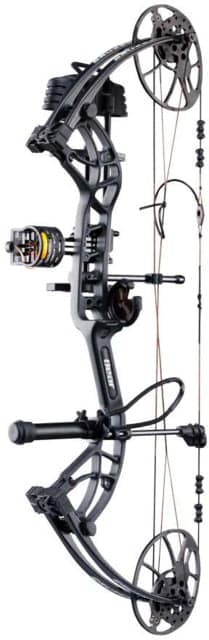
| Price | $479.99 MSRP (ready-to-hunt package) |
|---|---|
| Draw length | 14 to 30 in (maker page, June 2026) |
| Draw weight | 10 to 70 lb (10 lb floor) |
| Let-off | 75 percent |
| Axle-to-axle | 29 in |
| Brace height | 6.5 in |
| Mass weight | 3.2 lb |
| Package | Trophy Ridge rest, 4-pin sight, 5-arrow quiver, stabilizer, peep, sling |
This is the pick that answers criterion 1 better than anything in its price class. A maker-verified 14-to-30-inch draw-length range and a 10-to-70-pound draw weight with a true 10-pound floor mean one bow fits a small youth, a smaller-framed adult, and a full-grown hunter building toward 70, all without a bow press. It ships as a complete ready-to-hunt rig at a verified $479.99, which is criterion 3 covered, and it is the live successor to the bow Field & Stream named best beginner compound for deer.
The owner feedback is the strongest in this guide, and fit is the loudest theme by far: owners return again and again to the wide adjustment range and growing into it, with the no-press adjustment singled out as the reason the Cruzer fits a household of different shooters. Value and the complete package are the next themes, and the common advice is to buy it from a real pro shop and have it tuned, because the included accessories work but the setup is what makes a beginner bow shoot. The honest reliability picture is mixed and we are showing both sides: one owner reports a first-generation Cruzer past 100,000 shots over five seasons still shooting competitively, while a shop-side commenter says these Bears often need cam lean corrected before they shoot straight, and another describes a Cruzer whose cable mounts let go. The pattern we draw is the one the back-wall drawback already implies: this is a lot of adjustable bow for the money that rewards a good shop setup and is not a flagship in fit and finish.
Who it fits: the adult-onset beginner who wants one bow that fits now and after a season of progress, and the parent buying for a youth who will grow. Who should not buy it: the tall shooter past a 30-inch draw, and the buyer who will not get it professionally set up.
The drawback: The back wall is soft and it is not the quietest bow in the class. Across reviews the Cruzer's recurring knock is a mushy back wall and more shot noise than some budget competitors, and owners agree. The short 29 in axle-to-axle also tops out tall shooters: a 30-inch-plus draw maxes the bow out, and that crowd should look at the longer Bear Legit instead.
See price at OpticsPlanet ($479.99 MSRP (ready-to-hunt package))
Grow-with-you pick
Diamond Pro 305
| Price | $549 MSRP (Pro Shop Exclusive) |
|---|---|
| Draw length | 19 to 31 in (maker page, June 2026) |
| Draw weight | 7 to 70 lb (7 lb floor) |
| Axle-to-axle | 32 in |
| Brace height | 7.25 in |
| Mass weight | 3.3 lb |
| Speed (IBO) | 305 fps |
| Let-off | not stated on the maker page |
This is the pick for the buyer who wants the widest fit margin and the most forgiving geometry. The maker-verified 7-pound draw-weight floor is the lowest here, which suits the smallest or newest shooter, and the 19-to-31-inch draw range plus a long 7.25-inch brace height make it the forgiving, grow-into-it choice, the live successor to the Diamond Infinite 305. That long brace height is criterion 2 evidence of the most direct kind: a longer brace is more forgiving of a beginner's grip and release.
On owner evidence we are deliberately careful. Owner reviews for the Pro 305 are too scarce to use, so this pick carries none rather than sentiment we cannot source. The closest grounded owner data is for the Diamond Edge family it descends from, where owners praise the adjustability and the budget value and also report that the advertised low weight floor is hard to reach in practice and that the cams are the part to watch; that evidence lives in the budget section of our compound bow guide, linked below, and we send you there rather than borrow it here.
Who it fits: the beginner who wants the lowest weight floor and the most forgiving brace height, and who buys from a Diamond pro shop. Who should not buy it: the buyer who wants owner data at scale before spending $549, which for this exact model we do not yet have.
The drawback: It is the priciest pick here, and its owner record is thin. At a verified $549 it costs more than the Cruzer, and there is no usable owner feedback for the Pro 305 specifically, so its verdict rests on the maker-verified specs and on the closely related Diamond Edge family, which we link below. The maker page also does not state the let-off, a number we would want before calling it.
See price at Diamond Archery ($549 MSRP (Pro Shop Exclusive))
Youth and form pick
Genesis Original
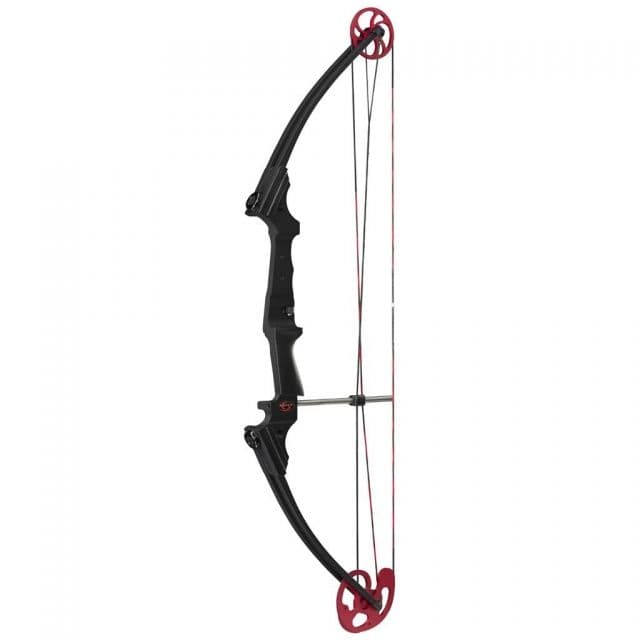
| Price | $175 to $254 (maker pages, bow only to kit) |
|---|---|
| Draw length | 15 to 30 in, single cam, no press needed (maker page, June 2026) |
| Draw weight | 10 to 20 lb |
| Let-off | zero, by design |
| Axle-to-axle | 35.5 in |
| Brace height | 7.625 in |
| Mass weight | 3.5 lb |
| Kit | tube quiver, arm guard, 5 arrows |
This is the pick for the youth shooter and the adult who wants to build clean form before anything else. It is the National Archery in the Schools standard bow, and the maker-verified reason is its single cam with no let-off: it holds the full draw weight at full draw, so the shooter cannot lean on a let-off valley and has to build a real back-tension shot. The 15-to-30-inch draw range fits almost anyone without a press, which is why one bow serves a whole classroom.
The owner feedback is strong on exactly this role and we read it that way. Owners and coaches name the Genesis as the program standard, praise it as durable enough for years of youth use, and describe it as a genuine form-builder. They are also unanimous on the limit: with a roughly 20-pound ceiling it is too light to hunt, and the common path is to start a youth on a Genesis and step up to an adjustable hunting bow like the Diamond Edge or a Cruzer when they are ready. The owner feedback is thin on shooting-feel nuance, because the bow's whole identity is the program trainer, and we leave it there rather than dress it up.
Who it fits: the youth shooter, the school or club program, and the adult who wants to learn form on a bow that demands it. Who should not buy it: anyone whose next shot is at an animal, who needs the hunting-weight picks above.
The drawback: It is a target and form bow, not a hunting bow, and that is by design. The 20-pound draw-weight ceiling is below what nearly every state requires to hunt big game, so a stock Genesis is for learning and target work, not the woods. Owners say the same thing plainly: it builds form, and you outgrow it for hunting.
See price at OpticsPlanet ($175 to $254 (maker pages, bow only to kit))
The budget bow we cover next door
The Diamond Edge 320 is the budget beginner bow many buyers ask about, and it has real owner evidence behind it. It does not get a fresh pick here for two honest reasons: its maker product page does not verify a spec and the model is absent from Diamond's current lineup, and the owner-experience work for it is already done and live in the budget section of our compound bow guide, where the 50-comment owner feedback, the adjustability story, the hard-to-reach low weight floor, and the cam-pin failure report are all laid out. Rather than duplicate that or table a spec we cannot verify, we point you there. When Diamond's page verifies the current spec, this section becomes a full pick, and the update line will say so.
What to skip
No beginner bow here earns a skip, but one common recommendation earns a caution: the PSE Stinger ATK. The Stinger line's reputation as a smooth single-cam starter is deserved, and owner feedback backs the smoothness and value. Two things hold it back for a true beginner. The current ATK's draw weight starts at a 50-pound floor (maker-verified), too high for many youth, smaller-framed, or recovering shooters to start at safely. And PSE's own page does not publish a usable price for it. A starter bow whose lowest setting is 50 pounds works against starting light and building up. Already comfortable at 50 to 70 pounds? It is a fine, smooth-drawing bow. Starting light? The Cruzer's 10-pound floor is the safer call.
The rest of the field
These bows earned attention without a pick. The Bear Legit Maxx RTH ($499.99, maker-verified) is the longer-axle Cruzer sibling at 31 inches, the better fit for a taller beginner, with the same ready-to-hunt package. The discontinued legacy names are flagged so you buy the live version: the Bear Cruzer G3, Diamond Infinite 305, and PSE Stinger Max are gone from their makers, replaced by the G4, the Pro 305, and the Stinger ATK. And the 2026 field the current Field & Stream roundup names, the Diamond Pro Max, PSE Brute ATK, and Bear Legend 30, are the newer SKUs we will weigh as their maker specs and owner feedback come in; we name them here with attribution rather than rank them on evidence we do not yet have.
If you are starting from zero
Get your draw length and draw weight from a shop before you buy anything; five minutes there decides more than any spec on this page. Buy a bow that fits a range, not a single setting, so it follows you as your form changes, which is why every pick above adjusts without a press. Take the ready-to-hunt package as a starting point and budget a shop setup on top of it, because a tuned cheap bow outshoots an untuned better one. And start at a draw weight you can pull slowly and hold steadily, then build; the bow that lets you start light is doing you a favor, not selling you short.
The criteria, the evidence basis, and the standing rule that we never claim testing we have not done are on the how we test page. The flagship bows you graduate to are in the compound bow guide, the arrows to pair with a first bow are in the hunting arrows guide, the first release is in the bow releases guide, bow coverage builds on the bows hub, and the guides index has everything live today.
More guides
Publication note
Initial publication. Picks carry maker-verified specs and owner reviews where there were enough to go on; the catalog moved under three of the original candidates, so this guide recommends the live successors, and owner feedback on the Diamond Pro 305 is thin, which the pick states.