The best bow releases of 2026
Four criteria, set before we examined a single release, applied to named expert roundups, verified at the makers' pages, and checked against owner reports at stated scale. The decision is wrist strap or handheld, made by your shot routine, with the switch cost named.
By Bowhunt America | Published 2026-06-15
Updated 2026-06-15

The verdicts, up front
- Wrist-strap pick: Spot-Hogg Wiseguy
- Thumb-button pick: UltraView UV Button
- Value pick: TruFire Edge
- Hinge / back tension: Stan OnneX and Carter Honey 2; the prices we could not verify are below
How we picked
Activation consistency and a clean break came first. Cold-weather and field handling second. Activation type and fit third, which sorts picks into camps. Price against the field last.
This guide is for the bowhunter shooting the wrist-strap release that came with the bow and wondering whether to move to a thumb button or a hinge, often after a brush with target panic or an inconsistent anchor. The release has one job, a repeatable clean break you do not consciously trigger, and the four criteria below are ordered by how directly they serve it, set and weighted before we examined a product page. The full basis for every claim is in the methodology block, including the switch cost the catalog pages never mention: changing activation types means re-learning the shot.
The criteria, in the order they were weighted
Set before any release was examined, in this order, for these reasons: a release's one job is a clean, repeatable break the shooter does not consciously trigger, so activation consistency leads; a hunting release lives on a wrist or in a pocket through cold mornings, so cold-weather and glove handling and retention come second; the activation type and its fit is the decision the camp section maps to your shot routine, so it sorts picks into camps rather than ranking them; price lands last, because a release is a multi-season purchase.
- Activation consistency and break quality: trigger crispness or hinge behavior, the surprise-break tendency, resistance to punching
- Cold-weather and field handling: glove operation, jaw or hook loading of the D-loop, wrist-strap comfort, finding and indexing a handheld at the shot, retention against loss
- Activation type and fit: wrist caliper or index, thumb button, hinge, or resistance; length, travel, and tension adjustment
- Price and value against the field: the verified price, judged against what the first three deliver
How we reviewed this
- Criteria:
- The four criteria above, in weighted order, committed before product research began.
- Evidence:
- Verified manufacturer specs read off each maker's current page and dated June 15, 2026; releases we could not verify at the maker ship no spec table here. Named expert roundups, compared against each other: Outdoor Life's 2026 release-aids roundup, Field & Stream's 2026 bow-releases roundup, and MeatEater's release-types how-to, with the wrist-versus-handheld framing they share and the winners they disagree on both surfaced. Owner reviews read at scale from Reddit's bowhunting and archery boards, chiefly r/bowhunting and r/Archery, counted by how many comments actually speak to shooting the release: owner feedback on the Spot-Hogg Wiseguy is solid (about 22 substantive comments) and the Stan OnneX moderate, while owner feedback on the UltraView UV Button and TruFire Edge is thin and flagged as such. Three candidate names were corrected at verification and recorded in the evidence file: the spotlighted UltraView release is the UV Button, not the UV3 (a sight); the current Tru-Fire Hardcore is the 2.0 Buckle Foldback; and the Tru Ball Fang has no reachable maker page, so it ships no spec table.
- Updated:
- June 15, 2026: initial publication.
Wrist strap or handheld: decide by your shot routine
The range argues this like a skill ladder, wrist for beginners and handheld for the serious. The honest version is a fit decision about how you actually shoot.
The wrist-strap release, index or caliper, is the low-friction stand-hunting answer. It is always on your wrist, it works in gloves, it forgives a hurried shot, and it is the release most hunters already own. MeatEater and both roundups agree it is the simplest tool under field pressure, when fingers are cold and a buck is closing. Its weakness is the trigger finger: it is the easiest activation to punch, which is where target panic starts.
The thumb button moves the trigger to the hand for a more deliberate, repeatable anchor, and it is the most-recommended bridge for a hunter who wants a cleaner break without going triggerless. It hangs on the D-loop while you wait, which many hunters like, and it costs you a release you have to find and clip on at the moment of truth.
The hinge and resistance releases remove the conscious trigger entirely to fight target panic, firing on rotation or back tension rather than a press. They are the strongest cure for a punch and the steepest learning curve, and many shooters keep one for practice and hunt with a trigger.
Here is the switch cost the catalog pages skip: changing activation types means re-learning the shot. A thumb button takes weeks to anchor; a hinge in a new user's hands is a tuning and discipline project, not a plug-and-play upgrade, and owners warn against switching close to season. Pick the camp your routine wants, then read the pick.
The picks
Wrist-strap pick
Spot-Hogg Wiseguy
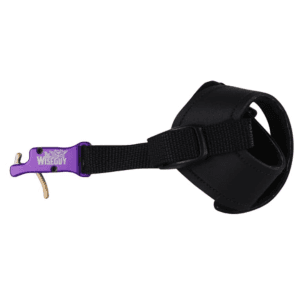
| Price | $144.99 to $179.99 by strap option (maker-listed price) |
|---|---|
| Type | wrist strap, forward trigger (maker page, June 2026) |
| Trigger | light, adjustable, stated zero travel |
| Jaw | open self-reloading hook for fast D-loop hookup |
| Length | adjustable; rigid body |
| Strap options | buckle, BOA dial, signature |
| Materials | not stated on the maker page |
This is the wrist release a major roundup features and owners keep, and it answers the first two criteria directly. The forward trigger with stated zero travel is the consistency half: owners describe it as a light, crisp, almost-touch-it break, and the open self-reloading hook is the cold-weather half, clipping the D-loop fast in gloves. Field & Stream features the Wiseguy for exactly that forward trigger and zero creep.
Owner feedback is solid, around 22 substantive comments once the wild-hog and hedgehog noise is filtered out, and it lines up behind the build and the trigger. Owners call it worth the money against the cheaper releases that wore out their D-loops, the buy-nice-once wrist release, and the BOA dial strap draws specific praise. One genuinely useful owner detail crosses what owners report: on wrist straps, a buckle or the BOA dial beats hook-and-loop for stand noise, because the loud rip of a velcro strap at the wrong moment is a real problem. The one defection in the data is a shooter who moved to a thumb release and shot more accurately, which is the next pick's case, not a knock on this one.
Who it fits: the stand hunter who wants one wrist release for years and shoots in gloves and cold. Who should not buy it: the shooter fighting a trigger punch, who should read the thumb and hinge sections, and the strict-budget buyer, who should read the value pick.
The drawback: The maker lists a price range, not a single number, and does not state materials. The price climbs with the BOA dial strap, and Spot-Hogg sits above the bargain wrist releases. There is one owner report of an internal failure, though the same owner reports a fast, painless warranty replacement, so treat it as a rare defect well handled rather than a pattern.
See price at MidwayUSA ($144.99 to $179.99 by strap option (maker-listed price))
Value pick
TruFire Edge
| Price | $99.99 MSRP |
|---|---|
| Type | forward-trigger wrist release; thumb-button variant also sold (maker page, June 2026) |
| Jaws | closed-bias dual-caliper, auto-closing |
| Break | linear-motion bearing |
| Length | over 1 in adjustment, lockable |
| Travel and tension | adjustable |
| Strap | leather buckle foldback |
This is the affordable entry owner feedback across releases points beginners toward, a maker-verified $99.99 with the adjustability the expensive releases charge for: a closed-bias dual-caliper head that auto-closes on the loop, a linear-motion-bearing break, and over an inch of lockable length adjustment. That is criterion 4 settled for the shooter not ready to spend $300, with enough trigger and length adjustment to grow into.
Owner feedback is thin, about a dozen comments and several from one prolific poster, so we read it as thin. The consistent story is value and role: the Edge is the release owners buy first, the affordable way to try a thumb button or keep a simple wrist release, and several report keeping it for years before deciding whether a premium handheld is worth it. Its sibling, the Tru-Fire Hardcore, draws the same affordable-and-durable reputation, with a handful of owners reporting six to nine years of service. Treat the Edge as the smart first release that lets you learn your preference cheaply.
Who it fits: the new shooter, and the hunter who wants a capable release without spending flagship money. Who should not buy it: the shooter who already knows they want a premium thumb button or hinge, who should buy that once.
The drawback: It is the entry release, not the endgame, and owners say so: many start on an Edge and upgrade to a $300 handheld once they know what they want. One owner reports punching himself out of the box until he seated the sensitivity screw properly, a setup step, not a defect, but check yours. The Edge family spans index, forward-trigger, and thumb forms, so confirm you are buying the configuration you mean.
The hinge and back-tension camp, and why we are not pricing it yet
If your problem is target panic, a punched trigger you cannot stop, the cure the sources point at is a hinge or resistance release that fires on rotation or back tension rather than a press. Outdoor Life names the STAN Onnex Resistance its best resistance release and an excellent tool for combating target panic, and the Stan OnneX and Carter Honey 2 are the two hinges our verification reached at the maker for their specs. The OnneX is a micro-adjustable hinge offered with smooth and click sears and in two-, three-, and four-finger configurations; the Honey 2 is a back-tension hinge with a floating head and a safety you can set to disengage automatically or push off by hand.
Owner feedback, moderate for the OnneX, supports it as a smooth, adjustable target-panic tool, with the click variant the one owners name most and credit with breaking a trigger-punch habit. The honest counterweight is a minority of secondhand reports of quality and customer-service slipping from Stan's earlier reputation, which we pass along as the forum chatter it is rather than a first-hand defect.
Here is why neither is a full pick with a table: the Carter page lists no price at all, and the Stan storefront rendered a price that conflicts with every retailer listing and reads as an error, so we will not publish a maker price for either. Our standard is that we price at the maker until affiliate setup, and the maker price did not verify. The specs are real and we are showing them; the price verification is missing and we are saying it. The other honest note, because the marketing invites it: owners did not report hinges going off unexpectedly, so we are not repeating that common warning as if the evidence here supports it. A hinge is a practice-first tool with a real learning curve; treat it as one.
What to skip
Nothing here earns a skip: no source failed a release, and owner feedback shows no failure pattern. The mistake owners actually report is timing, not product. Buying a hinge or a thumb button a few weeks before season and expecting to hunt with it is how good releases get blamed for bad seasons; a new activation type takes an off-season to learn. Buy it in the off-season, or hunt with what you can already shoot.
The rest of the field
These releases earned attention without a pick, none shipping a spec table we could not verify at the maker. The Tru-Fire Hardcore 2.0 Buckle Foldback ($109.99, maker-verified) is the value pick's durable wrist sibling, the one owners report keeping for the better part of a decade. The roundup field, attributed to the source that named it, includes the TRU Ball Execute V2 (Outdoor Life's best index, a clean break at a premium price), the Scott Little Goose II (Field & Stream's bowhunting pick), the Carter Like Mike II (Field & Stream's best overall), and the B3 Nemesis Flex (Outdoor Life's budget index). The Tru Ball Fang is a popular thumb release we leave here without a table because its maker page does not serve a verifiable spec.
If you are starting from zero
A few terms unlock the choices above. A wrist strap holds the release on your wrist; a caliper has two jaws that close on the D-loop, an index release fires with your trigger finger. A thumb button is a handheld release fired with the thumb, and a hinge or back-tension release has no trigger at all and fires on rotation. The D-loop is the cord on your string the release clips to, and travel is the slack in a trigger before it breaks. A surprise break is the goal, a shot you do not consciously command, because the moment you command it is the moment you can punch it.
Buy for the shot routine you actually have, change activation types in the off-season and not the week before opening day, and shoot any handheld at a shop before you spend $300 on it. The criteria, the evidence basis, and the standing rule that we never claim testing we have not done are on the how we test page. The bow the release serves is in the compound bow guide, the first bow it pairs with is in the beginner bow guide, release coverage builds on the releases hub, and the guides index has everything live today.
More guides
Publication note
Initial publication. Picks carry maker-verified specs and owner reviews read at scale where the feedback landed; owner feedback on the Wiseguy is solid, owner feedback on the UV Button and TruFire Edge is thin and flagged, and the hinge camp is shown in prose because its maker prices would not verify first-party.