The best bowhunting rangefinders of 2026
Four criteria, set before we examined a single unit, applied to three named expert roundups, verified at the makers' pages, and checked against owner reports at stated scale. Angle compensation is the archery criterion the golf-first models skip.
By Bowhunt America | Published 2026-06-15
Updated 2026-06-15

The verdicts, up front
- Top archery pick: Leupold RX-FullDraw 5
- Value pick: Leupold RX-1400i
- Do-it-all pick: Vortex Ranger 1800
- Budget pick: Halo XL450
How we picked
Ranging accuracy and acquisition on a small target came first. Angle compensation second, the archery line. Optics, display, and one-hand field use third. Price against the field last.
This guide is for the bowhunter ranging from a treestand or a western slope who has learned that a flat-ground number lies on a steep shot, and who is choosing between a cheap hunting unit, an archery-tuned mid-tier, and a do-everything premium rangefinder. The unit has one job, a fast and correct number on a small animal in poor light, and the criteria below are ordered by how directly they serve it, set and weighted before we examined a product page. The full basis for every claim is in the methodology block, including the owner debate over how much the angle math actually changes a shot, which we report instead of settling by fiat.
The criteria, in the order they were weighted
Set before any unit was examined, in this order, for these reasons: the rangefinder's one job is a fast, correct number on a deer-sized target at bow distances and often in poor light, so ranging accuracy and acquisition lead; the archery-defining feature is angle compensation, the corrected horizontal or shoots-like distance a steep treestand or western shot demands, so it comes second and is the line that separates an archery tool from a golf one; the optic and display must read in legal light and the unit must work one-handed from a stand, so glass and ergonomics come third; price lands last, across a wide field.
- Ranging accuracy and acquisition: a fast, reliable return on a non-reflective animal-sized target at bow distances in low light
- Angle compensation: a true angle-corrected distance, its accuracy on steep shots, and whether the bow mode is genuine or a golf-first afterthought
- Optics, display, and one-hand field use: glass, display contrast in low light, size and weight, glove and one-hand operation
- Price and value against the field: the verified price, judged against what the first three deliver
How we reviewed this
- Criteria:
- The four criteria above, in weighted order, committed before product research began.
- Evidence:
- Verified manufacturer specs read off each maker's current page and dated June 15, 2026, with the angle-compensation feature claim treated as central; units we could not verify at the maker ship no spec table here. Three named expert roundups, compared against each other: Outdoor Life's bow-hunting-rangefinder roundup (2023, the oldest and flagged), GearJunkie's hunting-rangefinder roundup (2025), and Field & Stream's bowhunting-rangefinder roundup (2026, the most current), all three of which name the Leupold RX-FullDraw 5 as the bow pick and all three of which open on angle compensation. Owner reviews read at scale from Reddit's bowhunting and archery boards, chiefly r/bowhunting and r/Archery, counted by how many comments actually speak to using the unit: owners report heavily on the Vortex Ranger, while owner feedback on the Leupold RX-FullDraw and the Halo is thin or absent, and the picks flag that. A catalog note: Nikon has exited the hunting-rangefinder segment and Bushnell's Bone Collector line is superseded by the R5 Broadhead 2, so both are sent to the rest of the field with their status stated.
- Updated:
- June 15, 2026: initial publication.
Angle compensation: the archery criterion, and the honest limit on it
Gravity acts on the horizontal distance to your target, not on the line of sight your eye and the rangefinder share. So a 40-yard shot taken at a steep downward angle from a treestand, or a steep uphill shot in the mountains, plays shorter than 40 yards, and a flat line-of-sight number sends the arrow high. An archery rangefinder computes the corrected, shoots-like distance and shows it; a golf or a bare line-of-sight unit leaves you doing trigonometry at full draw. That is why angle compensation is the criterion that separates a bow rangefinder from a generic one, and all three of our expert sources open on it.
Owners agree it is the feature to require, and they are also more honest than the marketing about when it matters. Several call an illuminated reticle and angle compensation practically necessary for bowhunting, and one names it the only feature that really matters for a bow unit. But the most-upvoted comment in our owner pull on the subject does the geometry and points out that at typical flat-country bow distances the correction is small enough not to move your pin, and only becomes decisive when you are high up with a close target or on genuinely steep western terrain. One owner reported his unit's angle mode did not save him from shooting over a deer's back from a high stand, while another found a competing unit read the steep shot two to three yards shorter at the same spot. The honest read: require angle compensation as the default, because the shot where it matters is the one you cannot take back, and understand that on flat ground inside 30 yards it is doing less than the box implies. So sort the field by whether the angle mode is genuine, then pick by how steep and far your shots actually run.
The picks
Top archery pick
Leupold RX-FullDraw 5
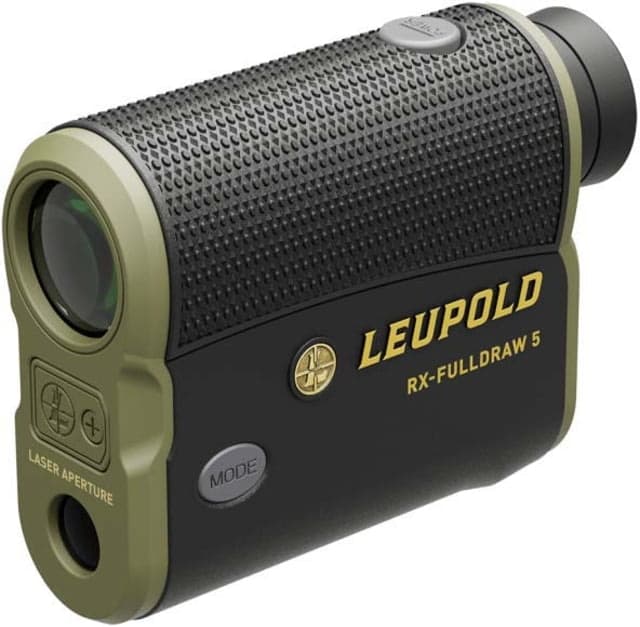
| Price | $499.99 MSRP |
|---|---|
| Magnification | 6x, 22 mm objective (maker page, June 2026) |
| Range | 900 yd deer, 1,200 yd reflective |
| Accuracy | plus or minus 0.5 yd to 125 yd |
| Display | red OLED |
| Weight | 7.5 oz |
| Angle compensation | archery-first: DNA engine, Archer's Advantage, Flightpath arrow-apex modeling, accepts bow velocity to 170 fps |
This is the only maker-verified unit here built archery-first, and it is the unanimous bow pick of all three roundups we read. The reason is criterion 2 in its strongest form: Leupold's Flightpath goes past correcting distance, modeling your arrow's apex from your bow profile and showing whether the shot clears a low branch, which is the treestand problem no generic unit solves. The 900-yard deer range and the red OLED display answer criteria 1 and 3.
Owner feedback is thin for this exact model, effectively one detailed owner, and we read it as thin rather than inflate it. That owner, a bow-shop employee, both recommends the FullDraw 5 as the best archery unit and reports that its arrow-flight modeling saved him from hitting foliage more than once, which is the one feature working as designed in the field. With the owner signal that light, we lean on the maker spec and the rare three-source expert agreement and tell you so. There were no owner failure reports.
Who it fits: the dedicated bowhunter, especially the treestand hunter who shoots through timber and wants the arrow-clearance read. Who should not buy it: the hunter who also wants one unit for long-range rifle work, who should read the do-it-all pick.
The drawback: The bow-profile setup is tedious and the owner record is thin. Outdoor Life flags the ballistics-input process as fiddly and notes there is no tripod mount, and our owner pull for the FullDraw specifically is one credible voice, not a body of owner feedback, so its verdict leans hard on the maker spec and the three-source expert agreement. It is also a premium price for a single-purpose tool.
Value pick
Leupold RX-1400i TBR/W Gen 2
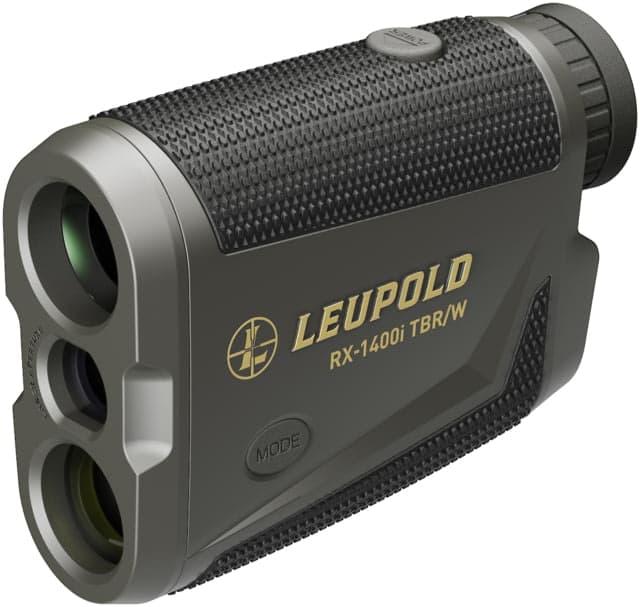
| Price | $199.99 MSRP |
|---|---|
| Magnification | 5x, 21 mm objective (maker page, June 2026) |
| Range | 1,400 yd reflective, 900 yd deer |
| Accuracy | plus or minus 0.5 yd to 125 yd |
| Display | red TOLED, adjustable brightness |
| Weight | 5.1 oz |
| Angle compensation | genuine bow mode: TBR/W plus Flightpath |
This is the archery pick for half the money, and the maker-verified reason is that it carries the same Flightpath bow mode as the FullDraw, the genuine arrow-apex read, in a lighter 5.1-ounce body at $199.99. For the hunter who wants real angle compensation and the branch-clearance feature without the FullDraw's premium and fiddly full ballistics profile, it is the value answer to criterion 2.
Owner feedback is thin, two or three substantive mentions, and they line up: owners name the 1400-series Leupold as a strong value and specifically praise the arrow-apex feature for clearing low branches from a treestand, with one hedging that it is not strictly necessary on most shots. The recurring practical knock is the two-year warranty against Vortex's lifetime coverage, which is a real decision-driver for buyers who keep gear hard. Thin but consistent, and we leave it there.
Who it fits: the bowhunter who wants genuine archery angle compensation on a budget. Who should not buy it: the buyer who weights a lifetime warranty heavily, who should weigh the Vortex below.
The drawback: The warranty is short for the category, and the glass is smaller. Owners point out Leupold warranties rangefinders for two years where Vortex covers them for life, which pushes some buyers to the do-it-all pick on that basis alone. The 5x, 21 mm glass and shorter feature set are the trade for the lower price, named here so the gap to the FullDraw is honest.
Do-it-all pick
Vortex Ranger 1800
| Price | $499.99 MSRP |
|---|---|
| Objective | 22 mm (maker page, June 2026) |
| Range | 10 to 1,800 yd reflective, 10 to 900 yd deer |
| Weight | 7.7 oz |
| Angle compensation | HCD (Horizontal Component Distance), marketed for bow and rifle |
| Magnification and accuracy | not clearly stated on the maker page; retailers list 6x and plus or minus 3 yd |
| Warranty | Vortex lifetime (VIP), the owner-cited reason to choose it |
This is the pick for the hunter who wants one rangefinder for the bow in fall and the rifle the rest of the year. The maker-verified HCD angle compensation covers the treestand and the slope, the 1,800-yard reflective range reaches well past anything archery, and the unit shoots both disciplines without complaint.
The Vortex Ranger line has the strongest owner feedback in this guide, and the single loudest theme is the warranty: owners pick Vortex over Leupold specifically for the no-questions lifetime VIP coverage, with more than one telling a story of a dead unit replaced free. They call the Rangers a value that punches above its price and good enough for bow, while agreeing the glass, speed, and long-range performance trail premium units from Leica and Sig. On angle compensation the owner evidence is honest both ways: one Ranger 1800 owner praises the angle mode for treestand and tower-blind shots, while another reports a Ranger's angle adjustment did not prevent a shot over a buck's back, which is the limit the decision section describes. The long-range ranging complaints owners raise are all rifle-distance problems that do not touch bow ranges.
Who it fits: the hunter who wants one trusted, warrantied unit for both bow and rifle. Who should not buy it: the dedicated bow shooter who wants arrow-flight modeling, who should read the top pick.
The drawback: Its angle mode is generic, and the maker page is oddly incomplete. The Ranger's HCD is true angle compensation but it does not model arrow flight the way the Leupold bow mode does, so the dedicated archer gets more from the FullDraw. The maker page also omits a clean magnification and accuracy figure, which is a strange gap, and at least one owner found the angle adjustment did not save a high-stand shot.
Budget pick
Halo XL450
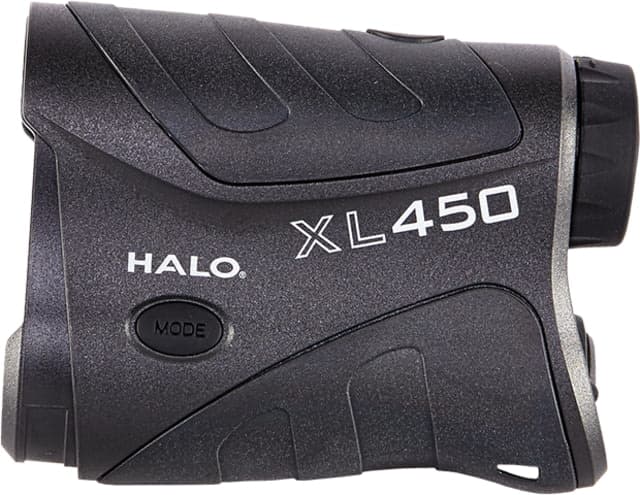
| Price | $139.99 (maker-listed) |
|---|---|
| Magnification | 6x (maker page, June 2026) |
| Range | 450 yd max |
| Angle compensation | Angle Intelligence (true horizontal distance) |
| Objective, weight, accuracy | not stated on the maker page; retailers list 22 mm and plus or minus 1 yd |
This is the budget answer that still clears the criterion that matters: it has Halo's Angle Intelligence, true horizontal distance, at a maker-listed $139.99. For a treestand whitetail hunter whose shots are inside 40 yards, an angle-compensating unit at well under half the price of the archery picks is the honest value call, because the geometry that matters for a high stand is covered.
We will be plain about the evidence: we found no owner feedback for the Halo, so unlike the picks above this verdict rests only on the maker-verified spec and the budget framing both the sources and owners give the under-$150 tier, where the general advice is to avoid the absolute bottom of the market but not to overspend for bow distances. When enough owner feedback lands, this pick gets the upgrade and the update line will say so.
Who it fits: the treestand whitetail hunter who wants angle compensation on a strict budget. Who should not buy it: the western hunter who needs range past 450 yards or who wants owner data behind the buy.
The drawback: The maker page is sparse and the owner record is empty. Halo states the magnification, range, and the angle feature but not the objective, weight, or accuracy, and we found no usable owner feedback for it at all, so this pick rests on the maker spec alone. The 450-yard ceiling is plenty for archery but caps the unit's wider use.
What to skip
Two buying mistakes, not two bad products. First, do not hunt with a golf or a bare line-of-sight rangefinder: without genuine angle compensation it gives you the wrong number on exactly the steep shot where the number matters. Second, do not buy a discontinued model as if it were current. Nikon has left the hunting rangefinder business, so any Nikon archery unit on a shelf today is old stock, not a supported current product. Bushnell's Bone Collector line, still named by two of the sources here, is superseded by the R5 Broadhead 2, so buy the current unit by its current name.
The rest of the field
These units earned attention without a pick. The Sig Sauer Kilo line (Canyon, Kilo1600 BDX) is angle-aware through Sig's AMR mode and draws genuinely strong owner praise, with more than one owner rating it faster and more accurate than the Vortex Ranger in a head-to-head; it ships no spec table here only because Sig's product pages do not serve a verifiable spec or price first-party, and it is rifle-first in design. The Bushnell R5 Broadhead 2 ($299.95) is the current bow configuration that replaced the Bone Collector the older roundups name. The Vortex Impact 4000 is a $2,199 rail-mounted rifle unit with angle compensation but no bow mode, out of scope for this guide. And the discontinued Nikon archery rangefinders are flagged above; do not buy old stock as current.
If you are starting from zero
A few terms decide everything above. Line-of-sight distance is the straight-line number from your eye to the target; horizontal or shoots-like distance is the corrected number gravity actually cares about, and angle compensation is the feature that does the correction for you. Reflective range is the distance a unit reaches on a bright flat target like a sign; the deer or tree range, always shorter, is the honest number for hunting. A bow mode that models arrow flight, like Leupold's Flightpath, goes a step past angle compensation by showing whether your arrow clears an obstacle on the way.
Require angle compensation, buy the deer-range number rather than the headline reflective one, and match the unit to how steep and far your shots run before you pay for range you will never use. The criteria, the evidence basis, and the standing rule that we never claim testing we have not done are on the how we test page. The ranging-and-dialing step a slider sight adds is covered in the bow sights guide, the trajectory context behind why distance matters is in the compound bow guide, rangefinder coverage builds on the rangefinders hub, and the guides index has everything live today.
More guides
Publication note
Initial publication. Picks carry maker-verified specs and owner reviews read at scale where enough owner feedback landed; owners report heavily on the Vortex, while owner feedback on the Leupold and Halo is thin, and the picks flag that, and Sig's maker page would not verify first-party so it ships no spec table.