The best broadheads of 2026
Four criteria, set before we examined a single head, applied to an instrumented 23-head bench test and verified at four makers' pages. This run we could not pull enough owner feedback, which we say plainly instead of papering over.
By Bowhunt America | Published 2026-06-12
Updated 2026-06-15

The verdicts, up front
- Top fixed pick: Iron Will S100
- Top mechanical pick: G5 Deadmeat V2
- Value pick: Magnus Stinger 4-Blade
- Skip for bone-risk shots: Rage Hypodermic NC +P; the evidence is below
How we picked
Penetration and wound channel came first. Structural integrity at impact second. Flight agreement with field points third. Price per hunt-ready head last, replacement blades counted.
This guide is for the hunter restocking a quiver before September, and for the first-time buyer staring down the fixed-versus-mechanical argument. A broadhead has one job, and the four criteria below are ordered by how directly they serve it. The full basis for every claim is in the methodology block, including what the June 15 update added: per-head owner feedback from the bowhunting community, woven into the picks alongside the bench data and maker-verified specs, with each pick's owner feedback strength stated plainly so a thin or noisy one is never read as more than it is.
The criteria, in the order they were weighted
Set before any head was examined, in this order, for these reasons: the head's one job is a fast, ethical kill, so what it does inside an animal outranks everything; a head that breaks at impact turns a good shot into a wounded animal, so integrity is judged on bone, not gel alone; a head you cannot get to hit where your field points hit is a miss waiting to happen, but flight is tunable and checkable in your own practice, so it gates picks rather than leading them; and price lands last, counted per hunt-ready head with replacement blades in the math.
- Penetration and wound channel: depth through real media at hunting energies, and the cut held through the hit
- Structural integrity at impact: blades and ferrule surviving bone, deployment reliability for mechanicals
- Flight agreement with field points: how close the head flies to practice points, and what tuning that takes
- Price per hunt-ready head: the verified price across a season, judged against what the first three deliver
How we reviewed this
- Criteria:
- The four criteria above, in weighted order, committed before product research began.
- Evidence:
- Verified manufacturer specs for all four named picks, pulled from each maker's current page and dated June 12, 2026; heads we could not verify at the maker ship no spec table here. Two named expert sources, compared against each other: Outdoor Life's instrumented broadhead bench (push-force gauge, sharpness in grams, three-head accuracy groups at 40 yards, gel wound channels, a PVC bone-simulation durability test; the page is titled 2026 and its dated update stamp reads August 2023, so we date the numbers to that bench session and say so) and Gun University's April 2026 mechanical roundup (one named tester, a far lighter protocol, weighted accordingly). Owner reviews read at scale, added June 15, 2026: community discussion pulled from Reddit's bowhunting and archery boards, chiefly [r/bowhunting](https://www.reddit.com/r/bowhunting/) and [r/Archery](https://www.reddit.com/r/Archery/), and counted by how many comments actually speak to shooting the head rather than name-dropping it. Owner feedback on the Iron Will is the strongest, roughly 45 substantive comments, almost all on r/bowhunting. Owner feedback on the Magnus Stinger and the Rage Hypodermic is moderate, about 25 to 30 substantive comments each. The G5 Deadmeat and SEVR raw pulls are noisy: 'deadmeat' collides with a horror-video channel and 'sevr' with the Treaty of Sevres, so after filtering each yields roughly 30 on-topic comments, and we count the filtered number rather than the raw 99. One prolific Deadmeat owner contributes several of those comments and is read as a single strong testimonial. Where owner feedback is thin or one-voiced, the pick says so.
- Updated:
- June 15, 2026: per-head owner reviews read at scale and added to the picks and the Rage skip. June 12, 2026: initial publication.
Fixed or mechanical: decide by setup, not by camp
The argument is usually framed as loyalty. The evidence frames it as a budget: your arrow arrives carrying so much energy, and every inch of cutting width spends some of it. A mechanical head buys a wider wound channel with energy you may or may not have; a compact fixed head spends almost nothing and penetrates accordingly.
The bench data makes the trade concrete. In Outdoor Life's instrumented broadhead test, the page titled 2026 with bench numbers dated to its August 2023 update, the fixed heads we name below needed 48 to 112 pounds of force to push through layered test media. The rear-deploying mechanicals needed 146 to 213 pounds. That spread is the penetration budget in one line: a mechanical typically costs two to three times the push of a compact fixed head, and it pays you back in cut width.
So map your setup honestly. A heavier draw weight, a longer draw, and a heavier arrow all add to the budget; a 55-pound rig at a 27-inch draw has far less to spend than a 70-pound rig at 30 inches, and our compound bow guide covers where those numbers come from. The kinetic energy calculator puts a number on what your own rig carries, with the published game-class minimums set beside it. Elk and quartering shots raise the bone risk, which punishes moving parts and rewards a solid head that holds together. Open-country wind and longer shots raise the flight demand, where the bench consistently grouped mechanicals closer to field points with less tuning. Broadside whitetail inside 30 yards from a fast rig is the case the wide mechanical was built for. Both camps earn a pick below, and the criteria, not the camp, did the choosing.
The picks
Top fixed pick
Iron Will S100
| Price | $139.95 per 3-pack MSRP |
|---|---|
| Type | Fixed, main blade plus bleeder (maker page, June 2026) |
| Cutting diameter | 1 1/16 in main, 3/4 in bleeder |
| Blade thickness | .062 in |
| Steel | A2 tool steel, cryogenically treated, 60 HRC |
| Grain options | 100 to 250 |
| Push force (Outdoor Life bench) | 48.3 lb, the best measured in the test |
| Accuracy (Outdoor Life bench) | 2.6 in groups at 40 yards |
The bench numbers read like the criteria list. Best push force measured in the test at 48.3 pounds, which is criterion 1's penetration half. Edge retention within 20 grams of factory after penetration, the best recorded, plus a pass through the PVC bone simulation, which is criterion 2 in two measurements. Groups of 2.6 inches at 40 yards sit inside the test's 3-inch acceptance line. The maker's spec page backs the build claims with numbers most makers do not publish: A2 tool steel hardened to 60 HRC in a .062-inch blade.
Owner feedback on the Iron Will, the strongest in this guide at roughly 45 substantive comments, lines up with the bench and sharpens the drawback. Owners describe punching through scapula and spine and dropping animals where they stand, and they report reusing and resharpening the same head across seasons, which is the penetration and durability criteria answered by people rather than a gauge. They also confirm the light-blood-trail caution in plain terms: more than one owner reports little surface blood and accepts it because the animal goes down fast. Two further owner notes the bench does not cover: the A2 tool steel wants rust care a stainless head does not, and sharpening it splits the room, easy with a diamond plate by some accounts and a real chore by others. The price complaint is constant, and its defenders are just as firm that the design earns it.
Who it fits: the elk hunter, the low-energy rig, anyone whose shots risk bone and who tracks the penetration budget honestly. Who should not buy it: the hunter who wants the widest possible wound channel on broadside whitetail, which is the next pick's case, and anyone for whom three heads at $139.95 fails the value test before the season starts.
The drawback: The cut is narrow and the price is not. That 1 1/16 in main blade is the smallest cutting diameter of our picks, and the test page itself relays owner reports of light blood trails; you are buying penetration and durability, and on marginal hits the tracking job can get harder. At $139.95 a 3-pack it costs roughly triple the value pick, and A2 carbon steel wants rust care a stainless head does not.
Top mechanical pick
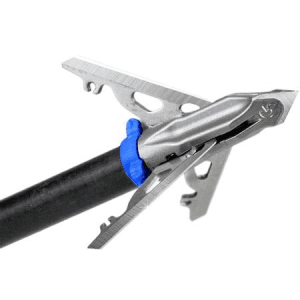
G5 Deadmeat V2
| Price | $71.95 as listed at the maker |
|---|---|
| Type | Mechanical, rear-deploying, SnapLock collar retention (maker page, June 2026) |
| Cutting diameter | 1.5 in |
| Grain options | 100 or 125 |
| Steel | stated as 100 percent Grade A steel |
| Practice tip | BMP practice tip included |
| Wound channel (Outdoor Life bench) | 2.04 in, the largest measured in the test |
| Push force (Outdoor Life bench) | 149.45 lb |
| Accuracy (Outdoor Life bench) | 2.0 in groups at 40 yards |
This is the one head both named sources put on top. The Outdoor Life bench measured the largest wound channel of all 23 heads at 2.04 inches, third-best factory sharpness at 220 grams, an edge-retention pass, and a durability pass, and called it the best mechanical for whitetails. Gun University's mechanical roundup, the lighter of our two sources with one named tester, independently made it best overall and confirmed full deployment through plywood. Two sources with different protocols agreeing on one head is the strongest cross-source signal in this field, and criterion 1 is exactly where it agrees: the widest measured cut, at a push force near the bottom of the mechanical range.
Owner feedback, about 30 on-topic comments once the unrelated horror-video channel of the same name is filtered out, reads cleaner on deployment than the bench's relayed caution. Owners credit the rear-deploying design with opening every time and folding less in flight, and several report full pass-throughs on broadside whitetail. The premature-deployment-in-brush pattern the test page relays did not surface as an owner theme in this pull, which we note rather than average into the drawback. The one real owner disagreement is poundage: some warn the three-blade head off low-draw-weight setups on energy grounds, while others report it opening fine at 60 to 66 pounds, which is the same penetration-budget question this guide opens with. One caveat on the evidence: a single enthusiastic owner contributes several of these comments, so that voice is read as one strong testimonial.
Who it fits: the whitetail hunter with a modern rig shooting broadside lanes, who wants the blood trail a 2-inch class cut produces. Who should not buy it: the elk hunter and the low-poundage shooter, because 149 pounds of push is a real spend, and anyone who still-hunts thick cover, where the deployment reports were earned.
The drawback: The maker's page does not state the pack quantity behind that $71.95, so we cannot price it per head and will not guess; check the cart before you order. And the deployment mechanism is the camp's standing tax: the test page relays owner reports of premature blade deployment in brush, collar retention notwithstanding, and the second source found the blades dulled after one pass through plywood.
See price at Sportsman's Outdoor Superstore ($71.95 as listed at the maker)
Value pick
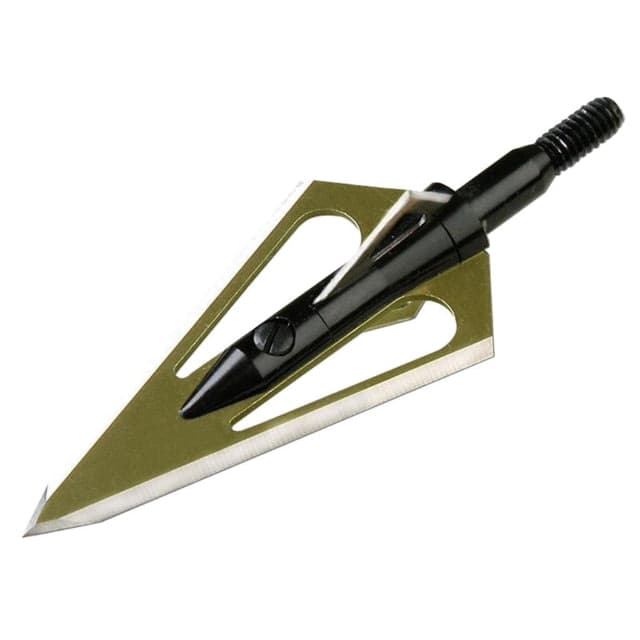
Magnus Stinger 4-Blade
| Price | $51.99 per 3-pack MSRP |
|---|---|
| Type | Fixed, cut-on-contact main blade with bleeders (maker page, June 2026) |
| Dimensions (100 gr) | 2 1/8 x 1 1/16 in |
| Grain options | 85, 100, 125, 150 |
| Blades | resharpenable, replacements sold ($17.99 a 3-pack) |
| Warranty | lifetime replacement guarantee |
| Push force (Outdoor Life bench) | 63.7 lb |
| Accuracy (Outdoor Life bench) | 2.56 in groups at 40 yards |
The bench measured 63.7 pounds of push force, second-best among the fixed heads it tested, with an edge-retention pass, a durability pass, and groups inside the acceptance line. The maker's page adds the value math: $51.99 for three, blades you can resharpen yourself or replace for $17.99, and a lifetime guarantee that has been Magnus's standing offer for years. Note the test page still says "about $40"; the maker's current price is the one above, and that drift is part of why we verify at the source. One spec gap, stated: the maker's page does not name the steel, so neither do we.
Owner feedback on the Stinger, around 30 substantive comments, is the cleanest in this guide and it backs the value case from the field. Owners at low draw weights, including youth and smaller-framed shooters in the 32-to-50-pound range, report consistent pass-throughs, which is the penetration criterion answered by people rather than a gauge. They praise how sharp the blades take and the no-questions warranty, both matching the resharpenable, lifetime-guarantee framing above, and one owner who chipped a head on a rock reports a free replacement. The fixed-blade blood-trail pattern shows up here too, owners trading thinner surface blood for the trauma and the pass-through. One scope note in the interest of honesty: most of this owner feedback discusses the two-blade and single-bevel Stingers rather than the four-blade SKU in the spec table, so we read it as Stinger-family sentiment and flag it as that.
Who it fits: the hunter filling a quiver on a budget who owns a sharpener, and the high-volume practice shooter who would rather resharpen than rebuy. Who should not buy it: anyone who wants hunting-sharp out of the box and will not check the bleeders' work against a target before opening morning.
The drawback: It ships needing work. Two of the three bench samples sat right at the test's 400-gram hunting-sharp line out of the package, so plan on a sharpening session before these go in a quiver, and the test model's bleeder blades failed to cut the gel at all, which makes the 4-blade's second cut a claim to verify on your own target, not a given.
What to skip
Rage Hypodermic NC +P, for bone-risk shots. For quartering angles, elk, and anyone who cannot guarantee rib-cage placement, skip it: integrity at impact is the second criterion here, and bone is the test that matters. The Outdoor Life bench failed it outright on durability, a broken blade in the PVC bone simulation. Gun University disagrees and gave the Hypodermic NC its best-blood-trail award on soft-tissue performance. Three things account for the split: the bench failure is specifically a bone-impact result, the two sources handled different variants (+P versus NC), and Gun University's own caution, that "you need to be more precise when shooting" this head, points the same way as the bench. Who actually wants it: the broadside-only whitetail hunter chasing the widest trail on soft hits, who accepts the precision demand and keeps the variant question in mind.
Owner feedback, about 25 substantive comments, both explains the appeal and supports the skip. The dominant theme by a wide margin is the blood trail, described as among the best owners have seen, which is why the head sells and why the broadside-whitetail reader above still wants it. The minority report is the one the criteria weight: owners describe it deflecting off a scapula and, in one account, failing to open, turning a clean hit into a long recovery, with another naming brush-induced premature deployment and energy limits at distance. Several of the satisfied voices come from high-volume soft-tissue shooters, so this is not a pile-on. The failures owners report are bone-and-energy failures, which is exactly why this head sits here rather than in a pick.
The rest of the field
The bench covered 23 heads; these earned attention without a pick, and none of them ships a spec table here because we could not verify them at the maker.
The SEVR Ti 2.0 was a near-pick and the test's best-mechanical award winner. Its case is real: 1.5-inch groups at 40 yards on the bench, a 2-inch cut, sold per head at $18.99 with a practice-lock mode and a lifetime warranty at the maker's page, which we did verify. It missed our mechanical slot on criterion 1 and 2 grounds: more push force than the Deadmeat V2 at 172.55 pounds, a smaller measured channel, and an edge-retention fail, with quiver rattle and pressure-deployment in quivers as the test's stated criticisms. The expert split goes the other way, though, and we surface it: the test's consulted expert prefers the SEVR 2.0 broadly and reports devastating field results. Owner feedback on the SEVR, roughly 30 comments once the Treaty-of-Sevres chatter is stripped out, is mostly positive on the practice tip that flies like the hunting head, on accuracy, and on durability, which tracks the test's best-mechanical read. Two honest counterweights from owners: the test's quiver-rattle criticism barely appears in the pull, so we leave it as the test's finding, and a credible owner report of a SEVR deflecting off a rib into the gut, alongside a recurring buy-on-price take that rates it no better than the Deadmeat, keep it from reading as a clear class leader. If per-head pricing and practice mode fit how you buy and shoot, it is a fine head; our criteria order just lands elsewhere.
The Day Six Evo 100 measured sharpest in the test at roughly 150 grams and shot the smallest groups, 1.0 inch, with the test relaying brittleness reports on its S30V steel. The QAD Exodus passed everything with the second-best spin runout and middling push force. The Cutthroat S7 won the single-bevel category with 49 pounds of push force and arrives unsharpened by design, which is a workflow, not a flaw, if you own stones. The Magnus Black Hornet is the budget alternative the deer-specific test liked, with a 1.95-inch channel and the same sharpen-first reality as the Stinger. The Annihilator 100 measured 900 grams out of the package, the dullest in the test and not huntable as shipped. And three heads failed a test outright: the G5 Montec M3 on accuracy (one of three heads a consistent 8-inch flier), the Slick Trick RaptorTrick on durability with bent blades, and the Swhacker Levi Morgan on the 75-degree deflection test, entering the gel 8 inches forward of aim.
If you are starting from zero
Four terms unlock everything above. Cutting diameter is the width of the wound channel the head opens, measured in inches; wider trails are easier to follow and cost more energy to make. The ferrule is the head's body, the machined core the blades mount to; titanium and steel ferrules survive bone better than aluminum. Cut-on-contact heads lead with a blade edge and start cutting at the hide; chisel-point heads lead with a solid tip that punches before the blades engage. Grain is the weight unit, 100 grains being the modern default; moving to a heavier head changes your arrow's spine requirement and front-of-center balance, which is the subject the hunting arrows guide covers in depth.
Buy for the animal and the angle you actually expect this season, sharpen or verify the edge before it goes in the quiver, and shoot the head you chose at your own target before you carry it. The criteria, the evidence basis, and the standing rule that we never claim testing we have not done are on the how we test page. Broadhead coverage builds on the broadheads hub, and the guides index has everything live today.
More guides
Publication note
June 15, 2026: per-head owner reviews read at scale and added to the picks and the Rage skip. Iron Will and the G5 Deadmeat carry substantial owner feedback; owner feedback on the Magnus Stinger reads mostly as the two-blade and single-bevel family and is flagged as such. Initial publication June 12, 2026.